

In the rush to embrace the science of reading, schools have invested millions in structured literacy programs promising to fix America’s reading crisis.
Phonics is back, decoding is in vogue, and “evidence-based” instruction is the new north star.
Yet amid all the enthusiasm for systematic phonics and word study, one essential half of literacy has quietly fallen out of frame: writing.
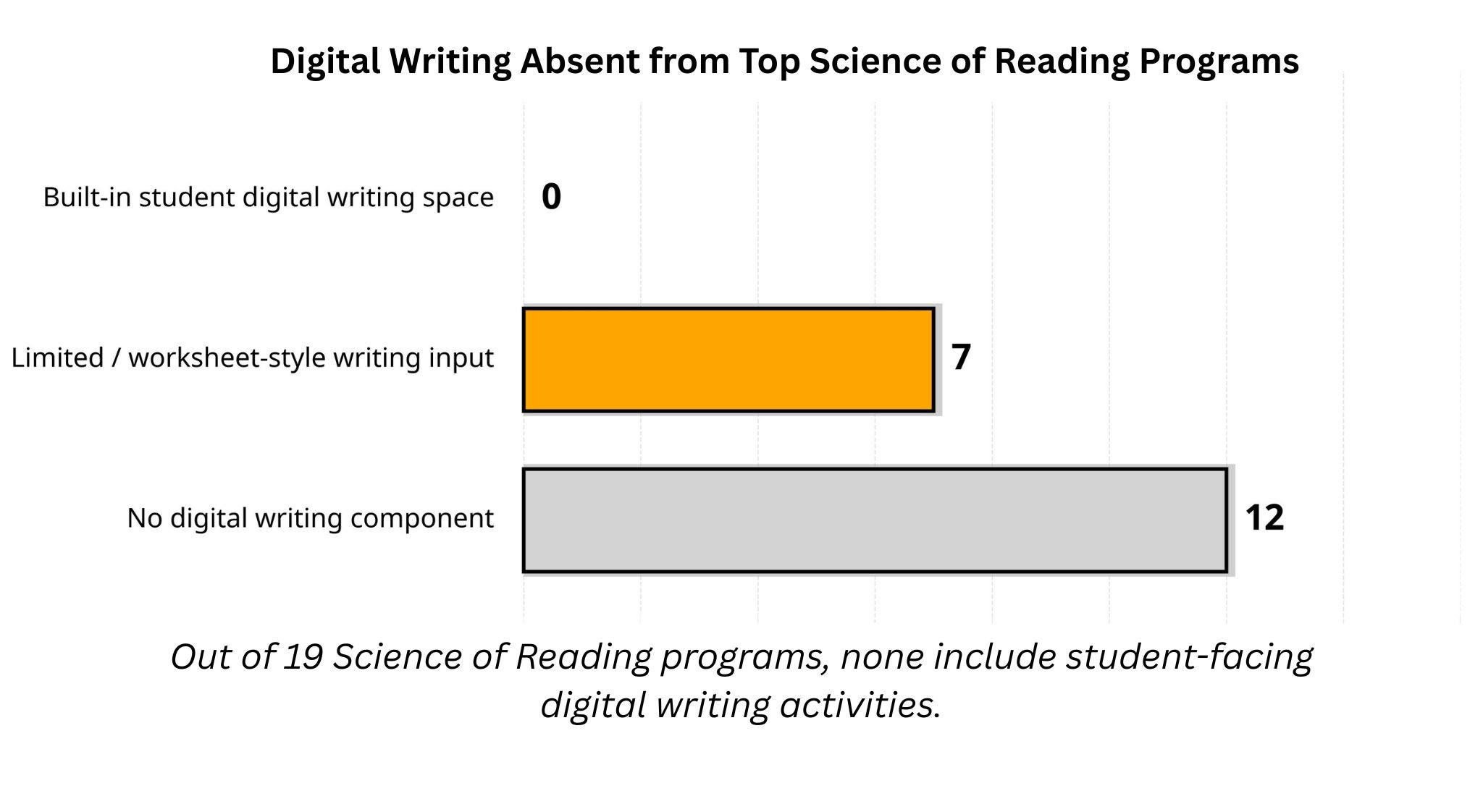
A comprehensive review of 19 of the most widely used Science of Reading or structured literacy programs shows that while nearly all offer polished digital ecosystems—phonics games, dashboards, and adaptive reading assessments—none include a full digital writing environment where students can actually write.
“We’re teaching half of literacy,” one reading coach told us. “Kids can click through phonics lessons all day long, but they can’t compose a single paragraph in those same systems.”
This imbalance has profound implications. Writing isn’t an optional enrichment to reading—it’s its mirror and counterpart. Research and the International Dyslexia Association’s own definition of “Structured Literacy” describe reading and writing as integrated processes that reinforce each other. Yet in practice, the digital infrastructure built to support structured literacy treats writing as an afterthought—or someone else’s problem.
The Digital Blind Spot
We reviewed 19 major programs. For each, we asked a simple question:
Does it include a student-facing digital writing space where kids can compose, draft, and revise?
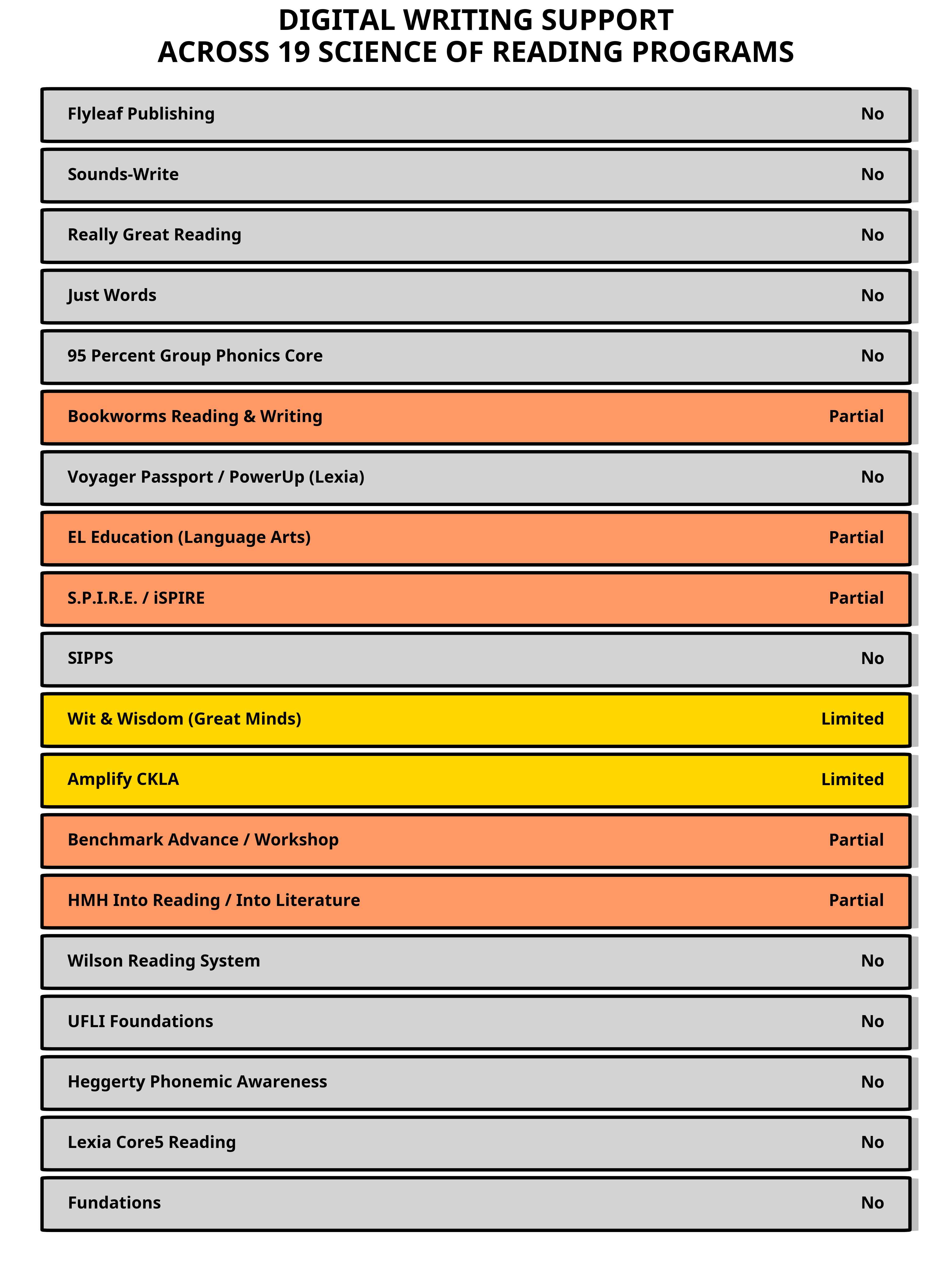
The pattern is impossible to miss. Most structured literacy programs digitized everything except the part where students actually write.
The edtech infrastructure built to serve the “science of reading” has prioritized subskills that can be measured—phonemic awareness, fluency, data dashboards—and neglected skills that must be expressed.
Why the Omission Matters
Writing isn’t just an endpoint of reading instruction—it’s one of its engines.
Research consistently shows that writing about what one reads deepens comprehension, vocabulary, and retention. But most digital literacy programs separate the two entirely, training students to recognize words without using them.
Part of the reason is structural. Reading is tested. Writing is not. Ed-tech companies have followed the money, investing heavily in adaptive reading assessments and gamified phonics activities—where growth data is easy to quantify—while leaving writing instruction to teacher improvisation.
“When you feel especially pressured to improve reading achievement,” writes literacy researcher Timothy Shanahan, “that is the time to embrace more tightly the combination of reading and writing.”
In many classrooms, a student’s first digital literacy experience is an adaptive test. Their last is a multiple-choice quiz. The messy, generative act of composing never happens inside the system itself.
Until digital literacy programs make room for students to actually write, we’ll keep producing better decoders—just not better writers. And my fear is that we’re training a generation of kids to be passive consumers and scrollers of content; not creators.
Sources
International Dyslexia Association – Structured Literacy definition
Wilson Language Training – Fundations Fun Hub
Lexia Learning – Core5 Reading program materials
Amplify – CKLA digital platform
Collaborative Classroom – Being a Writer 3rd Edition press release
Education Week – “How Does Writing Fit Into the Science of Reading?”
“Coach from the Couch” Literacy Blog – Timothy Shanahan on Reading/Writing Integration
The Writing Revolution – Hochman Method overview and MyTWR Tools
Heinemann – Units of Study for Writing (2023–24 Flight platform)
Empowering Writers – Program overview and The Hub
Voyager Sopris – Step Up to Writing 5th Edition
Education Northwest – 6+1 Traits of Writing framework
Writers Who Care blog – “Why Writing Needs Equal Status with Reading”
Thank you for pointing out this gigantic problem in the field. For people in search of field-tested writing and grammar instructional resources, please check out my Website, The Literacy Cookbook, and my book USING GRAMMAR TO IMPROVE WRITING: https://www.literacycookbook.com/page.php?id=10